Hit Master 3D - Knife Assassin
- 4.6
- Rating
- 100.00M
- Installs
- Free
- Price
 Analysis by App-foxy
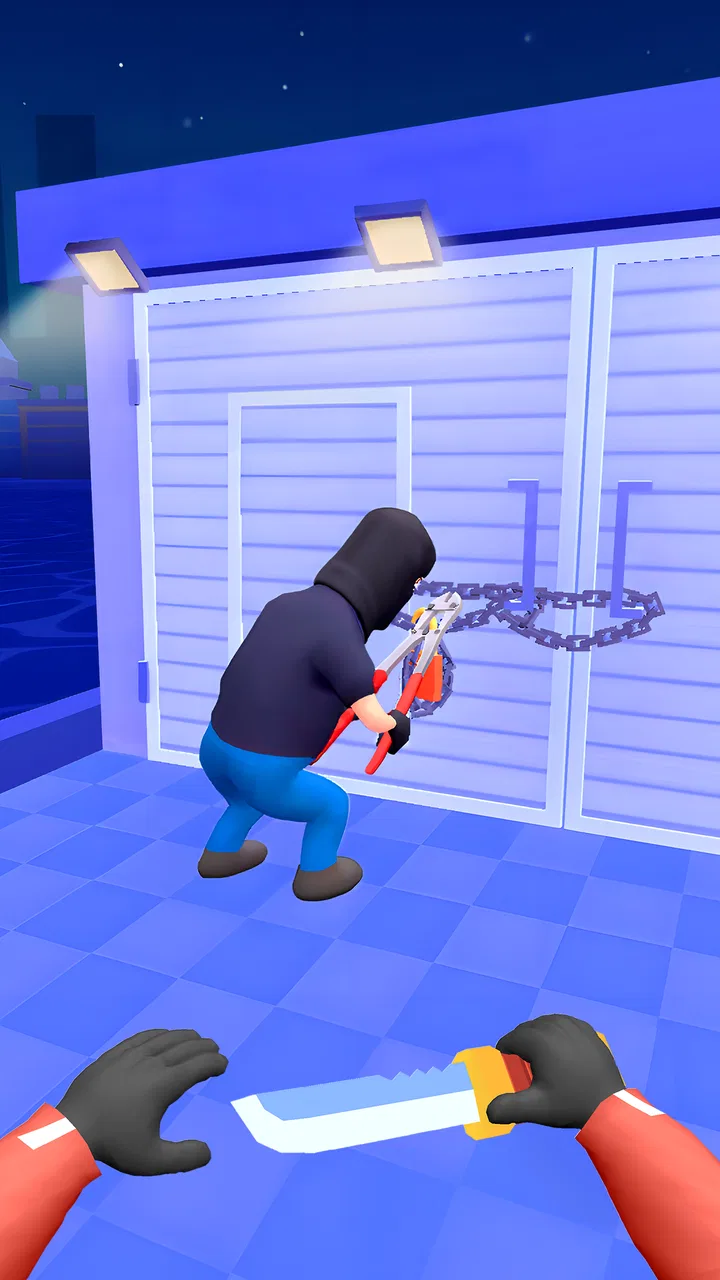
I spent time with Hit Master 3D - Knife Assassin as a quick-fire action game, and my first impression was clear: it is built for short bursts rather than long, story-driven sessions. The idea is easy to understand immediately. You throw knives, hit targets, and try to deal with enemies before the situation gets away from you. That simplicity is its biggest strength, but it also explains why the game will not satisfy everyone.
Developed by CASUAL AZUR GAMES, the game is free to download and sits in the action category. It has attracted over 100 million installs and holds a 4.7 average from around 337 thousand ratings, which suggests that its straightforward format has found a very large audience. I can see why: there is almost no learning curve, and a spare minute is enough to start playing.
How Hit Master 3D feels in everyday play
The best way to understand the game is to imagine opening it while waiting for a bus, taking a short break, or sitting through a loading delay. You do not need to remember a complicated control scheme or reconstruct a plot. The central action is immediate, and the game communicates its goal through the scene in front of you. That makes it approachable even if you rarely play action games on a phone.
You May Also Like

 Blood Strike: 2.5 Anniversary
Blood Strike’s Loadouts Turn Every Drop Into a Tactical Gamble
A close look at Blood Strike’s custom loadouts: how fast access to signature weapons reshapes its battle royale rhythm, rewards preparation, and narrows the gap between fights.

 Pandora - Music & Podcasts
Pandora’s Music Is Easy to Start, but Harder to Recover
Pandora’s strength is its low-effort path from a seed to a station. Its weak spot is how much confidence it asks you to place in connection, setup, and quiet recovery.

 8 Ball Pool
 Is Built on Rivalries, Rematches, and Routine
A close look at the rivalries, rematches, shared routines, and unanswered safety questions that turn a quick pool match into a persistent mobile community.

 Samsung Music
’s Quiet Strength Is Playing What You Already Own
Its reach comes less from spectacle than from dependable access to a personal library. That simplicity is both the app’s strongest retention engine and its ceiling.

 AccuWeather: Weather Radar
AccuWeather Review: A Quick, Clear Forecast for Everyday Decisions
For everyday plans, the best forecast is the one you can understand quickly. AccuWeather makes rain timing, radar, and local conditions easy to act on, with a few trade-offs.

 Hill Climb Racing
Why Hill Climb Racing Still Turns Crashes Into One More Run
A tiny car, a bumpy hill and one more upgrade: Hill Climb Racing keeps resurfacing because its simple chaos makes every near-miss feel personal.
More From Our News Desk



In my experience, the early moments feel brisk because the game removes most of the usual preparation. There is no need to study a large map or manage a long list of abilities before beginning. You focus on timing and placement, then move on to the next challenge. This gives each attempt a satisfying rhythm, especially when I was looking for something active but not mentally demanding.
That speed has a trade-off. If you prefer games that gradually reveal deep systems, carefully developed characters, or a large campaign, this can feel thin. The appeal is not complexity; it is the repeated satisfaction of lining up a throw and seeing whether it works. I would recommend it to someone who enjoys compact action challenges, not to a player searching for a full console-style adventure.
Fast starts, but not necessarily endless variety
The game’s quick entry is useful in real life. I could pick it up without setting aside a whole evening, and a short session did not feel like a commitment. That is a meaningful advantage over action games that require several minutes of preparation before the interesting part begins. It also makes the title suitable for casual players who want a clear objective rather than a large amount of reading.
At the same time, the basic loop can become familiar. Throwing knives and hitting targets are enjoyable when the arrangement creates a small timing problem, but the novelty depends heavily on how much variation each encounter offers. I found myself enjoying the precision more when I treated each stage as a compact puzzle instead of simply tapping through it.
A useful habit is to slow down mentally before acting, even when the screen appears to encourage speed. Looking at the target layout first can prevent a careless throw. The game rewards attention more than frantic tapping, and this is one of the less obvious differences between a satisfying attempt and a frustrating one.
What happens during longer or heavier sessions
Short sessions are where the design makes the most sense. During a longer run, the repeated action becomes more noticeable, and the absence of a broader objective can make progress feel less meaningful. I would not choose it as my only mobile game for a long journey unless I already knew that I enjoyed repetitive precision challenges.
Heavy use also changes how I judge the experience. When I play for several minutes at a time, I pay more attention to interruptions, loading behavior, and how consistently the controls respond. The game is at its best when the next attempt follows naturally from the previous one. Any pause or interruption feels more obvious because the core loop depends on momentum.
I would also avoid treating it as a background game while doing something else. The throws require enough attention that divided focus can lead to mistakes, particularly when targets or enemies demand a more deliberate sequence. It is casual in length, but not always casual in concentration.
For an everyday example, I think it works well during a coffee break when I want a self-contained activity. I can play a little, stop, and return later without needing to remember a complicated mission. On the other hand, if I am commuting in a place with distractions and can only glance at the screen, a slower puzzle game would probably be a better fit.
Stability and recovering from interruptions
Reliability matters more in a short-session game than many people expect. If a title is designed for quick play, I want it to let me get into the action without unnecessary friction. My overall impression is that the simple structure helps here: there are fewer layers to understand, so returning to the game feels uncomplicated.
Still, I would not assume that every interruption is harmless. Phone calls, notifications, app switching, or an accidental lock can break the flow of a precision attempt. The practical lesson is to begin a challenge when you have a moment of uninterrupted attention, rather than launching it while expecting to be pulled away immediately.
Recovery is also easier when I regard failed attempts as part of the design instead of as a major setback. The game is most forgiving psychologically when I restart with a small adjustment: change the timing, inspect the target order, and avoid repeating the exact same throw. That approach makes failure useful instead of irritating.
The current version is 1.13.1, and the game supports devices running Android 7.0 or later. Those details make it accessible to many Android users, but compatibility alone does not tell me how every phone will behave. Older hardware, limited free storage, or an overloaded device can still affect the general feel of any action game, so I would keep expectations sensible on aging phones.
Resource demands and device limitations
Because the game is centered on compact action scenes rather than a large open world, I would expect it to be less demanding than many visually ambitious mobile games. That is an expectation based on its focused format, not a promise that every device will deliver identical results. A newer phone should be the safer choice if you care about consistently responsive play.
On an older device, the main concern is not whether the concept is understandable; it is whether input feels immediate enough for accurate throws. A small delay can turn a good decision into a failed attempt. If your phone already struggles with other games, close unnecessary apps before playing and avoid judging the title solely by performance on a heavily loaded device.
Battery behavior is another practical consideration during extended use. I would not install this expecting it to replace a low-power puzzle game for an entire day. Action scenes keep the screen active and require repeated interaction, so longer sessions are naturally more demanding than a few quick attempts. For a short break, that is unlikely to matter; for continuous play, it becomes part of the trade-off.
Screen size can affect comfort as well. On a compact phone, targets and movement may feel more crowded, while a larger display can make the action easier to read. I would particularly favor a larger screen for anyone who has difficulty with small visual details. The game’s simple controls do not eliminate the importance of seeing the scene clearly.
Controls, timing, and the value of patience
The central control idea is easy to pick up, but easy controls do not mean every situation is easy. The challenge comes from deciding when and where to throw, not from memorizing a complicated button layout. I enjoyed that balance because it lets the game stay accessible while still giving careful players room to improve.
One practical technique is to separate observation from action. First identify the target that matters most, then consider whether an immediate throw could create a poor angle for the next move. This is especially useful when several objects compete for attention. Rushing because the game looks simple is one of the quickest ways to lose control of an otherwise manageable attempt.
Another tip is to use failed throws as information. Instead of blaming the control immediately, ask whether the problem was timing, position, or an incorrect target choice. That small change in mindset makes the game feel more skill-based and less random. It also gives repeat attempts a purpose, which helps with the title’s limited complexity.
I would not recommend playing with the expectation that every stage will become a deep tactical exercise. The decisions are compact, and the pleasure comes from solving them quickly. Players who enjoy refining a small action may appreciate this. Players who need character development, equipment management, or a large strategic layer should look toward a more substantial action game.
Free access and the purchase question
The game is free, which lowers the risk of trying it. You can discover whether the throwing loop suits you without paying at the start. That is important here because the game’s appeal is very specific: if you enjoy quick target-based action, the simplicity may feel refreshing; if you do not, no amount of extra content would change the basic style.
There are in-app purchases ranging from $0.99 to $6.99 per item. I would approach those carefully and decide in advance whether the free experience already gives me enough enjoyment. A purchase can make sense for someone who plays regularly and wants to support the game, but I would not spend simply because a difficult attempt was frustrating.
For families, the Teen content rating is worth noticing before installation. The action is presented in a stylized game context, but parents should still check whether that rating fits the player using the device. The rating also signals that this is not being positioned as a very young children’s game, even though the controls are simple.
Who should choose it, and who should skip it
I think it is a good match for players who want a free action game with an immediate objective, short sessions, and a focus on timing. It is especially suitable if you like repeating a compact challenge until your decisions become cleaner. The large install base and strong average rating reflect broad appeal, although popularity does not guarantee that its repetitive structure will suit every player.
I would skip it if your priority is a rich narrative, online competition, elaborate character progression, or a large world to explore. It is also not my first choice for someone who wants a relaxing game that can be played with almost no attention. The action may be simple, but successful throws still require focus.
Compared with a typical match-three puzzle game, this offers more direct action and less planning across a board. Compared with a full action adventure, it is much lighter and faster to start, but far less expansive. Compared with an endless runner, it replaces constant movement with deliberate target decisions. Those comparisons explain its place well: it is a compact precision game rather than a complete action package.
My final performance verdict
After using it as both a quick break game and a longer casual session, I see Hit Master 3D - Knife Assassin as a focused title that succeeds when its limits match your expectations. Its strongest qualities are immediate access, understandable action, and a satisfying emphasis on timing. The format also makes it relatively easy to return to after an interruption because there is no complicated story or system to reconstruct.
Its weaknesses are equally clear. Repetition can appear during extended play, precision may suffer on a struggling or cramped device, and players looking for depth will outgrow the central loop. I would keep it installed for short action breaks, but I would pair it with another game if I wanted variety across a long session.
CASUAL AZUR GAMES has made something approachable rather than ambitious. That is not a criticism by itself. The game knows how to deliver a small objective quickly, and its free entry makes trying it straightforward. My recommendation is simple: download it if you enjoy compact knife-throwing challenges and want a game that gets moving quickly, but skip it if you need a detailed campaign or a more demanding long-term system.
My verdict: it is a polished-feeling choice for short, focused action, with the best experience coming from patient timing rather than frantic tapping. The Teen rating, Android 7.0 minimum, free price, and optional purchases are practical details to consider, but the real decision is whether its repeated target-and-throw rhythm sounds enjoyable to you.
FAQs for Hit Master 3D - Knife Assassin
01What is the main objective of Hit Master 3D - Knife Assassin?
In Hit Master 3D - Knife Assassin, the primary objective is to eliminate enemies using your knife-throwing skills. Players must navigate through various levels, strategically targeting opponents while avoiding obstacles and ensuring hostage safety. The game combines precision, timing, and strategy, offering an engaging experience for players seeking action-packed gameplay.
02Are there in-app purchases in Hit Master 3D - Knife Assassin?
Yes, Hit Master 3D - Knife Assassin includes in-app purchases that allow players to enhance their gaming experience. These purchases can include new knives, skins, or power-ups. While the game is free to play, spending money can provide additional customization and advantages, though it's not necessary to enjoy the game fully.
03What are the device requirements to play Hit Master 3D - Knife Assassin?
To play Hit Master 3D - Knife Assassin, you need a device running on Android or iOS with a minimum of 2GB RAM for optimal performance. Ensure your device's operating system is updated to the latest version to avoid compatibility issues. The game is designed to run smoothly on mid-range and high-end devices.
04How can I improve my skills in Hit Master 3D - Knife Assassin?
Improving your skills in Hit Master 3D - Knife Assassin involves practicing your timing and precision. Focus on mastering the controls and learning enemy patterns. Experiment with different strategies and utilize in-game power-ups wisely. Watching tutorials and gameplay videos can also provide useful insights and tips from experienced players.
05Is Hit Master 3D - Knife Assassin suitable for children?
Hit Master 3D - Knife Assassin is rated for ages 12 and up due to its cartoonish violence and action elements. While the game is designed to be entertaining and engaging, parents should consider whether the content is appropriate for their children based on their maturity level and sensitivity to animated violence.
Pros
- Simple and intuitive controls make gameplay easy.
- Engaging levels with increasing difficulty.
- Bright and colorful graphics enhance experience.
- Offline play available
- no internet needed.
- Frequent updates with new content and features.
Cons
- Ads can be frequent and disruptive.
- Limited variety in weapon choices.
- Repetitive gameplay may become monotonous.
- In-app purchases can be pricey.
- Lacks a multiplayer mode for social play.

Hit Master 3D - Knife Assassin
Gallery